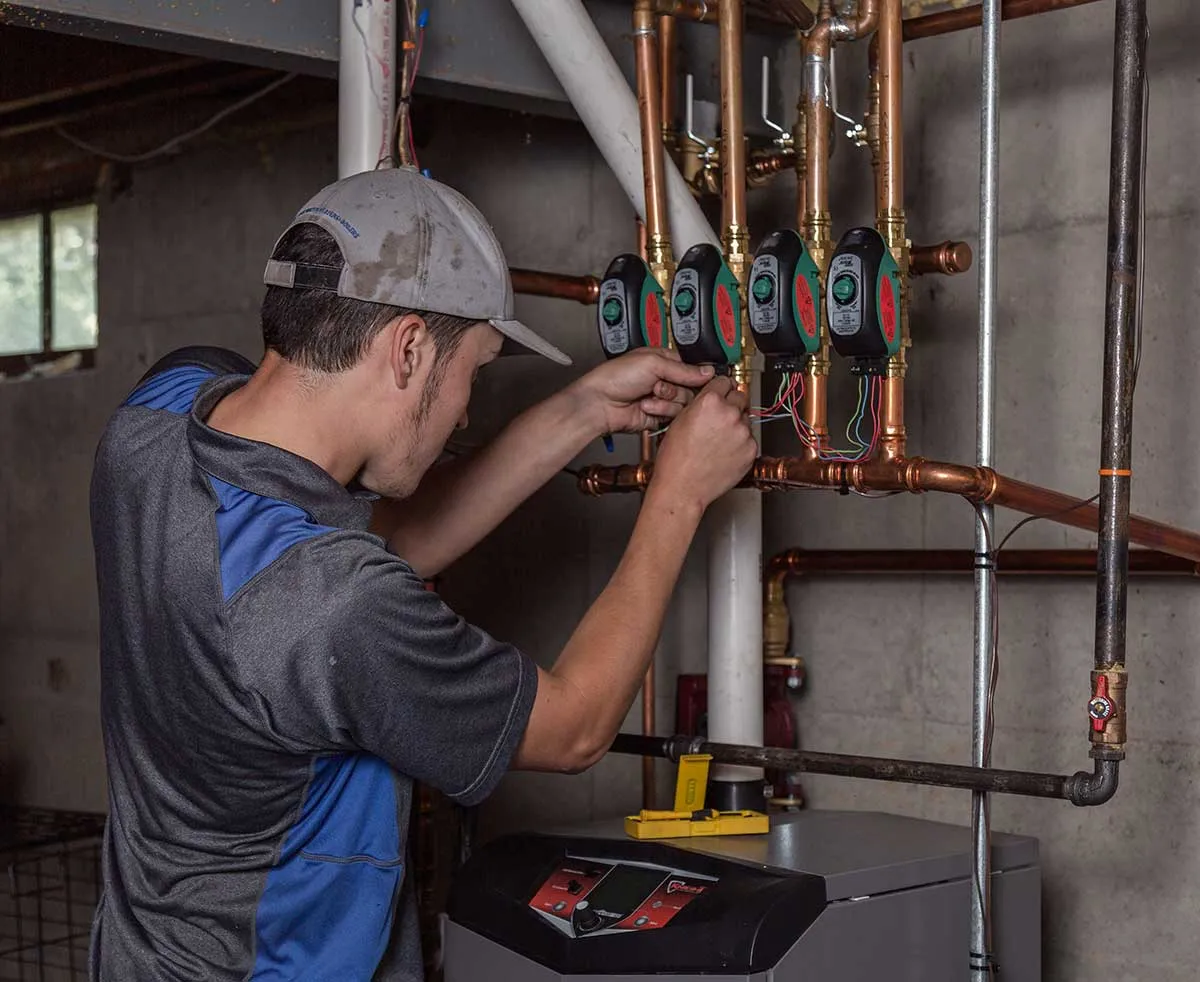
When a Baxi boiler attempts to ignite but fails to light and run, common causes include a frozen or blocked condensate pipe, low system pressure, or a faulty ignition electrode or gas valve. A Gas Safe engineer will systematically check these components to isolate the fault.
What’s Happening When Your Boiler Tries and Fails to Ignite?
You hear a series of rapid clicking sounds—the spark electrode trying to ignite the gas—followed by a brief whoosh as gas flows, but the flame doesn't catch or hold. The boiler’s control board detects this failure and shuts down the gas valve as a safety measure, often after a few attempts. This symptom points to a problem in the ignition sequence, where one of several essential components isn't providing the right conditions for a stable flame.
The Most Common Causes, Diagnosed in Order
An engineer typically follows a logical sequence to find the cause, starting with the simplest and most frequent issues.
- Condensate Pipe Blockage: This is a very common culprit, especially in winter. Baxi boilers are condensing models, producing acidic wastewater. If the external condensate pipe freezes or gets blocked, a safety sensor prevents the boiler from starting to avoid internal flooding. You might hear gurgling from the boiler or see water near the pipe outlet.
- Low System Pressure: If the pressure gauge on the boiler reads below 1 bar, a pressure sensor will stop the boiler from firing to prevent damage. This can happen due to a small leak in the system or a faulty pressure relief valve.
- Faulty Ignition Components: The spark electrode and its sensing probe (flame detection electrode) can become coated in carbon deposits or crack over time. A weak spark or a failure to detect a flame will cause the boiler to abort the ignition sequence.
- Gas Supply Issue: The gas valve may not be opening correctly, or there could be a problem with the meter or supply. An engineer will check if the valve is receiving the correct electrical signals from the PCB and measure the gas pressure. A smell of gas is an immediate emergency requiring the gas emergency line.
- Printed Circuit Board (PCB) Fault: Less common, but the PCB controls the entire ignition sequence. If it fails to send the right signals to the gas valve or ignition transformer, the process will fail. This is usually a diagnosis of exclusion after checking other components.
What a Gas Safe Engineer Will Check
To pinpoint the exact cause, an engineer performs systematic checks. They will first inspect the condensate pipe for blockages and thaw it if frozen. Next, they'll verify the system pressure and repressurise if needed, while also checking for signs of leaks. Using a multimeter, they will test the ignition electrodes for correct sparking and resistance, cleaning or replacing them if fouled. They will then test the operation of the gas valve, ensuring it opens and provides the correct pressure. Finally, they will examine the PCB for signs of damage or faulty connections, using manufacturer test modes to verify its outputs.
Important Safety Notes and Next Steps
If you suspect a gas-related issue—such as smelling gas, seeing a lazy yellow flame instead of a crisp blue one, or noticing scorch marks on the boiler—you must act immediately. Turn off the boiler, avoid any switches, and call the gas emergency service. For all other symptoms, a qualified Gas Safe registered engineer should investigate. Repeatedly letting the boiler attempt to ignite can stress components. While you can safely check the pressure gauge and visually inspect the condensate pipe, internal diagnostics and repairs require a professional.
Related System Checks
Sometimes, the root cause lies elsewhere in the heating system. An engineer might also check that the pump is running freely, as a seized pump can cause an overheat that prevents ignition. They may also verify that external controls, like your thermostat or programmer, are sending a valid demand for heat to the boiler. These are less likely to cause the specific 'trying to ignite' symptom but are part of a thorough diagnosis.
Frequently asked questions
Can I fix a boiler that won't fire up myself?
Homeowners can safely check and repressurise the system if low, and thaw a frozen condensate pipe with warm water. Any work involving gas components, ignition parts, or internal electrical systems is illegal and dangerous for anyone who is not Gas Safe registered.
Why is the condensate pipe such a common problem with this symptom?
All modern Baxi boilers are condensing. A blockage in the condensate pipe triggers an internal safety switch (the condensate trap sensor) that prevents ignition to stop the boiler from flooding. It's often the first thing an engineer checks.
Does this mean I need a new boiler?
Not usually. Most causes, like a blocked pipe, low pressure, or dirty ignition electrodes, are straightforward repairs. A PCB or gas valve replacement is more involved but often still more cost-effective than a full boiler replacement on a relatively modern unit.