Common Ideal Boiler Problems and What Usually Causes Them
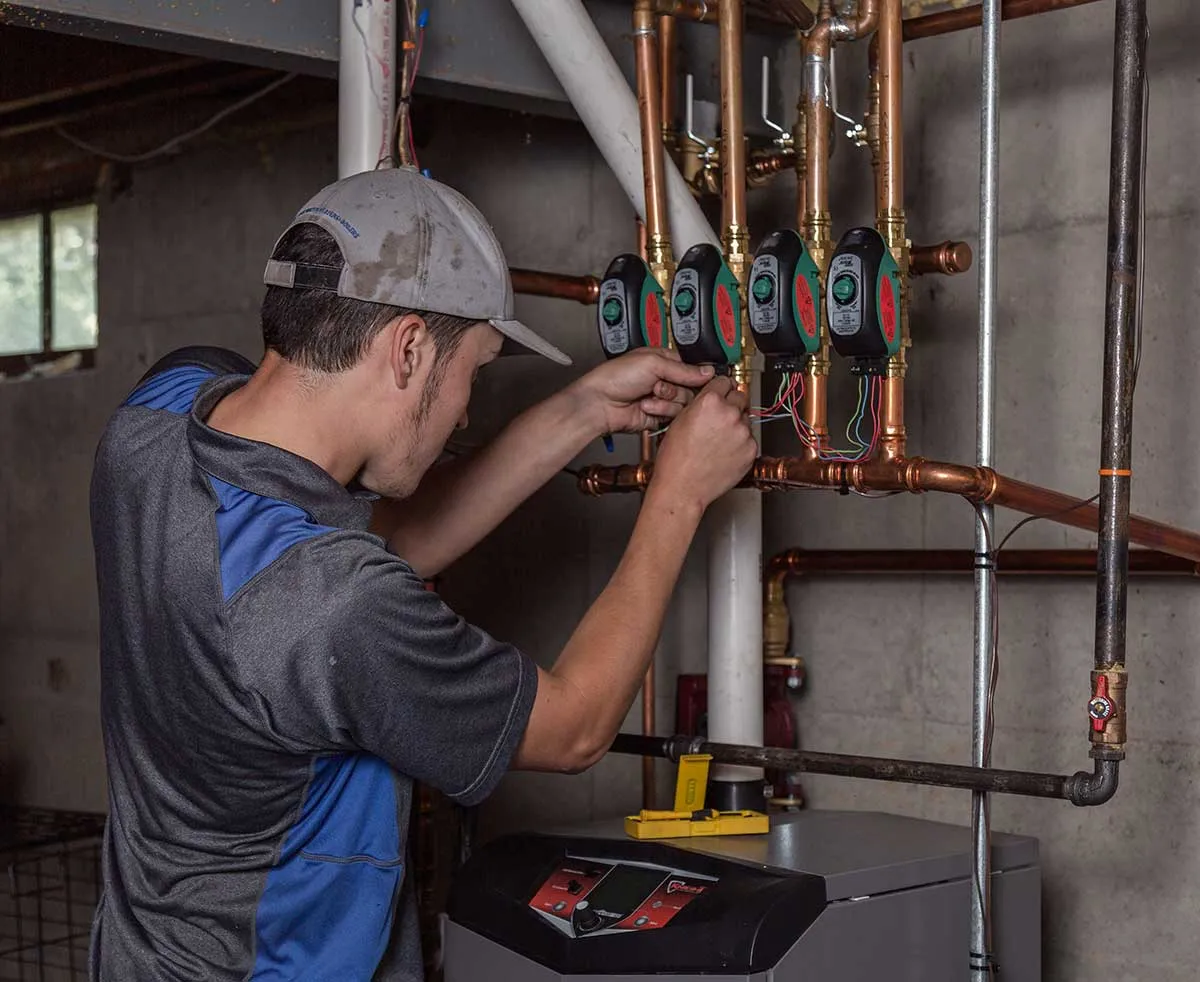
Most Ideal boiler problems fall into five groups: low pressure, failure to light, poor circulation, a combi with no hot water and less common fan or board faults. The F or L code on the display tells you which, and only a few are safe to deal with yourself.
The most common Ideal boiler problems are low water pressure (F1), ignition lockouts (L2, and F2 for flame loss), circulation and overheat faults (L1 and L9), a combi that gives heating but no hot water, and less often a fan fault (F3) or a control board that needs setting up (F9). The code on the display tells you which one you have. A few can be dealt with at home: topping up the pressure, thawing a frozen condensate pipe and one reset. Everything else sits inside the casing and needs a Gas Safe registered engineer. Here is how to tell the problems apart and when to stop.
What Are the Most Common Ideal Boiler Problems?
On current Ideal boilers, most faults fall into five groups: pressure, ignition, circulation, hot water and electronics. The letter at the start of the code is the first clue.
Ideal boilers, including the Logic, Logic+, Logic Max, Vogue and Instinct ranges, show codes that start with F or L. As a rule, an F code is a fault that clears once the condition behind it is fixed, while an L code is a lockout that needs a manual reset. That is why pressing reset on an F1 achieves nothing until the pressure is back up. Codes and their exact meaning can vary a little between ranges and older models, so check the table in the user guide for your boiler. The model name is on the front panel or on the data badge underneath.
Write the code down exactly as shown before you touch anything. A reset can clear it from the screen, and it is the most useful single fact you can give an engineer.
Why Does My Ideal Boiler Keep Losing Pressure?
An Ideal showing F1 has low water pressure. Topping up through the filling loop gets it going again, but if you have to keep doing it, water is leaving the system somewhere.
With the system cold, the gauge should normally sit at around 1 to 1.5 bar. If it has dropped well below that, top it up as the user guide describes and the F1 should clear. If it comes back within days or weeks, the usual causes are a slow leak on a radiator valve or a joint under the floor, a pressure relief valve letting water out through the copper pipe on the outside wall, or an expansion vessel that has lost its air charge. A gauge that climbs close to 3 bar when the heating runs and drops back as it cools points towards the expansion vessel. Repeated topping up brings fresh oxygen into the system, which speeds up corrosion, so a recurring F1 is worth finding rather than living with.
Why Does My Ideal Boiler Show L2 or F2?
L2 is an ignition lockout: the boiler tried to light, or lit and lost the flame, and shut down for safety. F2 is flame loss and belongs to the same family. The common causes are no gas reaching the boiler, a frozen or blocked condensate pipe, or a worn ignition or flame-sensing electrode.
Three checks are safe to make yourself. See whether the hob or other gas appliances work and whether a prepayment meter has credit. Check that the gas valve under the boiler has not been knocked. In freezing weather, look at the plastic condensate pipe where it leaves the house, and if it is frozen, pour warm, not boiling, water along it before resetting once. If the L2 code on an Ideal boiler comes back after that, the electrode, gas valve, fan or control board needs testing. An L2 that only appears on the first firing of the morning is worth mentioning when you book, because it helps narrow down the part.
What Do L1 and L9 Mean on an Ideal Boiler?
L1 points to low water flow through the boiler or a flow temperature outside the expected range. L9 means the boiler has overheated and shut down. Both usually come from the same problem: water is not moving through the boiler well enough to carry the heat away.
The usual reasons are a pump that is sticking or wearing out, sludge narrowing the heat exchanger or pipework, air trapped after work on the radiators, low pressure, or too many radiator valves closed at once. You can check the pressure, make sure several radiators are open and bleed any that are cold at the top. Then reset once. If the code returns, or you hear a rumbling, kettle-like noise from the boiler, stop resetting it. Each restart heats the same trapped water again. An engineer will test the pump and the flow through the boiler, and if sludge is the real cause they should say so rather than only replacing whichever part failed first.
Why Is There Heating but No Hot Water From My Ideal Combi?
When an Ideal combi heats the radiators but the taps run cold or lukewarm, the diverter valve is the usual cause. The flow sensor and a scaled plate heat exchanger are the next suspects.
Before assuming a failed part, rule out the simple things. Check the hot water temperature control has not been turned down, open the hot tap fully, because a trickle may not be enough to trigger the boiler, and make sure the mains cold pressure at the kitchen tap is normal. Radiators that warm up while you run a hot tap are a strong sign the diverter valve is sticking. Our article on why an Ideal boiler is not giving hot water goes through the symptoms of each part in more detail. All three are repairs inside the casing, and on most combis they are routine jobs rather than a reason to change the boiler.
What About F3, F9 and L6?
These appear less often but matter when they do. F3 is a fan fault, F9 usually means a control board that has not been set up for the boiler, and L6 means the boiler has detected a flame when there should not be one.
- F3, fan fault: the board cannot confirm the fan is running correctly before it tries to light. Causes range from worn bearings and wrong fan speed to wiring faults or water damage. There is nothing for a homeowner to check here.
- F9, board not configured: typically seen after a replacement board has been fitted without being set up for that exact boiler. It needs the engineer who fitted the board, or another engineer, to configure it properly.
- L6, false flame: the boiler has detected a flame with no demand for heat, which can point to a faulty gas valve. Treat it as urgent. Switch the boiler off and call an engineer rather than resetting it.
If the display is blank rather than showing a code, check the fused switch next to the boiler and your consumer unit before assuming a board fault.
When Should You Call an Engineer, and Is an Ideal Worth Repairing?
Reset once after the safe checks above. If the same code comes back, stop and book a repair. Most Ideal faults come down to one failed part and are worth fixing.
Do not reset at all, and call straight away, if you smell gas, see soot or scorch marks around the boiler, or hear loud, continuous banging. If you smell gas, turn the supply off at the meter if you can reach it safely, open the windows, avoid electrical switches and ring the National Gas Emergency Service on 0800 111 999. Our guide on how to reset an Ideal boiler shows where the reset is on a Logic and which codes it can and cannot clear.
Repair is the wrong answer on an older Ideal with a leaking heat exchanger, several parts failing at once, or parts that are no longer made, and a good engineer will tell you that plainly rather than keep patching it. By law, any work inside the casing must be done by a Gas Safe registered engineer. When you contact us about an Ideal boiler repair in London, give us the model, the full code and whether you have already topped up or reset it. That is usually enough to know which parts to bring.
Frequently asked questions
Are Ideal boilers prone to problems?
No more than most modern boilers. The faults we see on Ideal boilers are the same ones every make gets: pressure loss, ignition lockouts, diverter valves, pumps and sludge. How reliably an Ideal runs depends far more on how it was installed, how clean the system water is and whether it is serviced every year.
What is the difference between an L code and an F code on an Ideal boiler?
An L code is a lockout, which stays on the display until the boiler is manually reset. An F code is a fault that clears by itself once the condition behind it is put right, such as F1 clearing once the pressure is topped up. Check your model's user guide, as meanings can vary slightly between ranges.
Why does my Ideal boiler keep turning off?
An Ideal that fires and then shuts down is usually locking out on low pressure, a flame or ignition fault, overheating from poor circulation or a blocked condensate pipe. The code on the display tells you which. If there is no code, a faulty room thermostat or programmer switching the boiler off is also worth checking.