Baxi Boiler Showing E1? What E1 19, E1 33 and E1 68 Mean
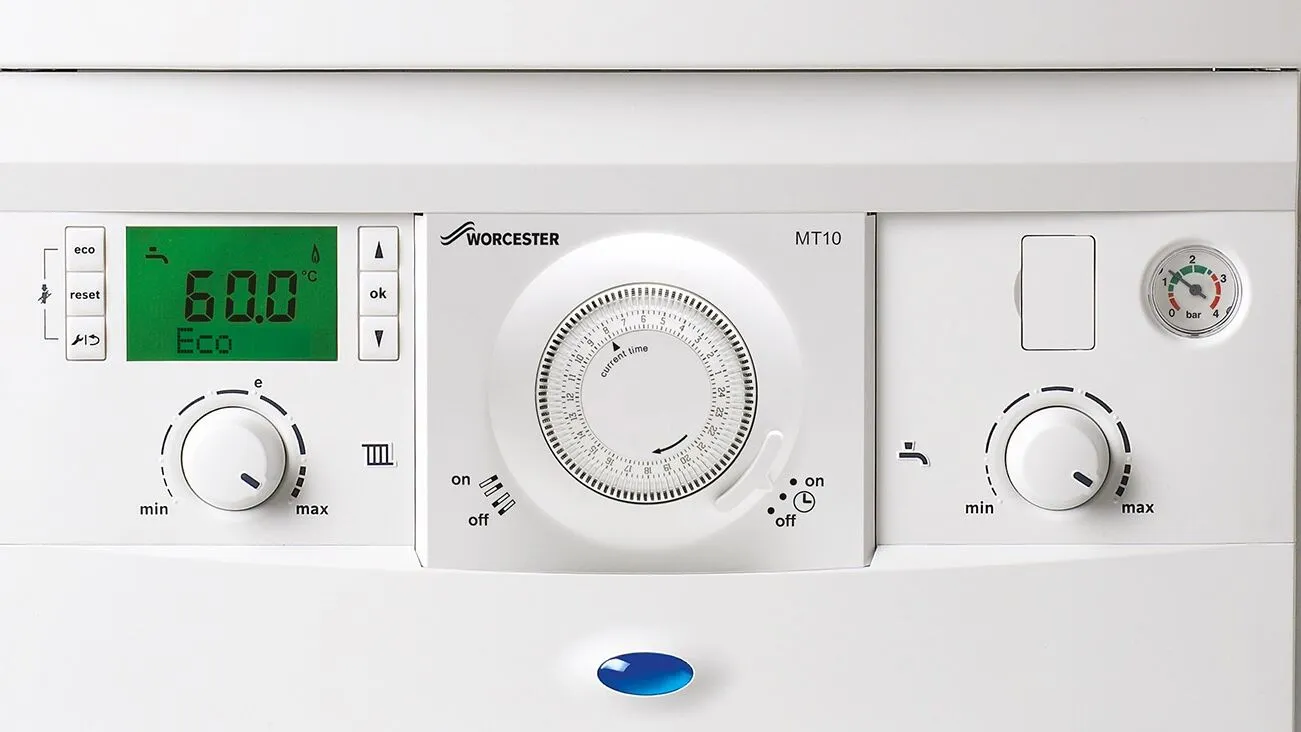
An E1 on a Baxi boiler is rarely the whole story. It is usually the first part of a three-digit code such as E119 (low pressure), E133 (ignition) or E168 (control board). Read the digits that follow before you do anything else.
If your Baxi boiler is showing E1, you are almost certainly looking at the first part of a longer fault code. Most current Baxi, Potterton and Main boilers use three-digit codes that start with a 1, such as E119, E133 and E168, and people often read them as "E1 19", "E1 33" or "E1 68". Look for the digits that come after the E1, because that is what tells you whether it is a low-pressure fault you can fix yourself or an ignition or electrical fault that needs a Gas Safe registered engineer. If you have a symptom rather than a code, start with our guide to common Baxi boiler problems.
Why Your Baxi Shows E1 and Then Other Numbers
E1 is normally the start of a code, not the code itself. Write down every character on the display, including anything that appears straight after the E1 or alternates with it.
Baxi, Potterton and Main boilers share the same family of fault codes, and most of the ones homeowners see fall in the E1xx range. Our guide to Potterton boiler problems and fault codes covers the Potterton side in more detail. Depending on the model and its display, the full code may appear in one go, or you may notice the E1 first and the remaining digits separately. That is why so many searches are for things like "E1 19" or "E1 68": the person is reading one code in two halves.
If your display genuinely shows E1 and nothing else, and the model is an older one, do not guess. Older boilers used different code lists, so check the manual for your exact model. The model name is usually printed on the front panel or on a label underneath the boiler.
The Common Baxi E1 Codes and What They Mean
The code after the E1 points to one part of the boiler. These are the ones we are asked about most on Baxi, Potterton and Main boilers:
- E1 10 (E110): overheat. The safety thermostat has operated because the boiler got hotter than it should.
- E1 18 and E1 19 (E118, E119): low water pressure. The system pressure has dropped too far for the boiler to run safely.
- E1 25 (E125): circulation fault. Water is not moving through the boiler properly, often because of the pump, air or a blockage.
- E1 28 (E128): flame failure. The boiler lit, but the flame has gone out repeatedly.
- E1 33 (E133): ignition failure or interrupted gas supply. The boiler tried to light and did not detect a flame.
- E1 60 (E160): fan fault. The fan or its wiring is not working as expected.
- E1 68 (E168): control board lockout. The main circuit board has locked out without a more specific cause, often after a power cut.
Exact wording varies slightly between models, so treat this as a guide and confirm against the manual for your boiler.
E1 18 and E1 19: Low Pressure You Can Usually Fix
E118 and E119 are the codes most homeowners can deal with themselves. They mean the water pressure in the heating system is too low, usually below about 0.5 bar on the gauge. Our Baxi E119 low pressure fault code page covers that code on its own.
Check the pressure gauge on the front of the boiler. If it is low, topping the system up to about 1 to 1.5 bar through the filling loop and then resetting the boiler normally clears the code. Our guide to repressurising a boiler safely walks through it step by step.
If the code comes back within days or weeks, topping up again is not a repair. Water is leaving the system somewhere, through a leak, a dripping pressure relief valve or a failed expansion vessel, and an engineer needs to find out which. If the gauge reads normal and E119 still shows, the pressure switch or sensor itself may be at fault, which is also engineer work.
E1 33 and E1 28: Ignition and Flame Faults
E133 means the boiler could not light, and E128 means it lit but kept losing the flame. Both are safety lockouts on the gas side of the boiler.
There are a few things you can safely check first:
- Other gas appliances, such as the hob, are working.
- A prepayment gas meter has credit.
- The gas isolation valve under the boiler is open, with the lever in line with the pipe.
- In freezing weather, check that the plastic condensate pipe outside is not frozen, because a blocked condensate pipe can stop the boiler lighting.
If all of that is fine, reset the boiler once. If E133 or E128 comes back, the cause is inside the boiler, typically the ignition electrode, flame sensor, gas valve or gas pressure at the appliance. That is work for a Gas Safe registered engineer. Our Baxi E133 guide has more detail, and if the boiler simply will not start, see why a Baxi boiler won't fire up.
If you smell gas at any point, turn the gas off at the meter, do not use electrical switches, open the windows and call the National Gas Emergency Service on 0800 111 999.
E1 10: When the Boiler Has Overheated
E110 means the boiler shut down because it got too hot. It is a protective cut-out, but it is also a sign that heat is not being carried away from the boiler as it should be.
Common reasons are poor circulation from a sticking or failing pump, sludge restricting flow through the heat exchanger, air in the system, or radiator valves that have all been closed at once. A single E110 after an unusual event, such as every radiator being turned off, may clear with a reset. If it keeps returning, do not keep resetting it. The boiler is telling you something in the system is restricting flow, and an engineer should test the pump and the flow through the boiler.
E1 25, E1 60 and E1 68: Faults That Need an Engineer
These three codes point to parts inside the casing: the circulation path, the fan and the control board. None of them has a safe homeowner fix beyond one reset.
- E125 often comes down to the pump, trapped air or sludge. If the pressure is also low, top it up first, as that sometimes clears it.
- E160 involves the fan that pushes combustion gases out through the flue. The boiler will not run safely without it, so it locks out.
- E168 can appear after a power cut or electrical blip. Switching the boiler off at the fused spur for a minute and back on sometimes clears it. If it returns, the control board or its wiring needs testing.
How Many Times Should You Reset It?
Reset once, after doing the safe checks above. If the same code comes back, stop and call an engineer rather than resetting over and over.
A lockout is the boiler protecting itself and you. Repeated resets will not fix a worn electrode or a failing pump, and can make an intermittent fault harder to diagnose. When you get in touch, tell us the full code, the boiler model, and whether you have already topped up the pressure or reset it. That is usually enough for us to know which parts to bring. We work across London, and you can book a diagnostic visit online.
Frequently asked questions
What does E1 19 mean on a Baxi boiler?
E1 19 is fault code E119, which means the water pressure in the heating system is too low for the boiler to run. Check the gauge and, if it is below about 1 bar, top it up to 1 to 1.5 bar through the filling loop and reset. If it keeps coming back, water is escaping somewhere and an engineer should find the leak.
What does E1 68 mean on a Baxi boiler?
E1 68 is code E168, a general control board lockout. It often appears after a power cut. Switching the boiler off at the spur for a minute and back on can clear it, but if it returns the circuit board or its wiring needs testing by a Gas Safe registered engineer.
Can I reset a Baxi E1 fault myself?
You can press reset once after checking the pressure and the gas supply. Low-pressure codes such as E119 are often cleared by topping up. Ignition, overheat, fan and board codes that return after one reset need an engineer, not further resets.