Why Does My Boiler Make Different Noises? Banging, Gurgling, Whistling Explained
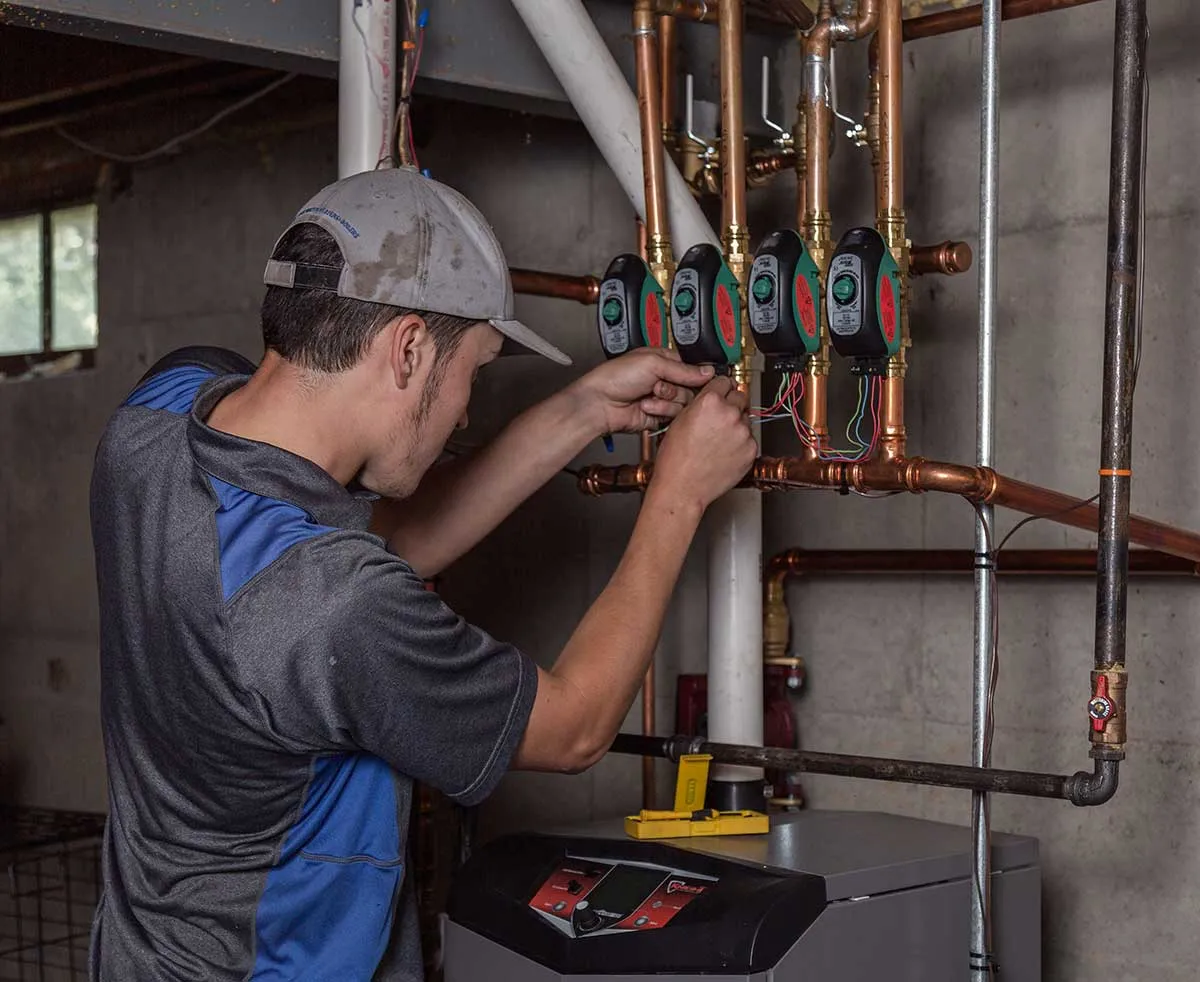
Different boiler noises point to specific faults: banging often means kettling from limescale, gurgling suggests trapped air or condensate issues, and whistling indicates limescale or pump problems.
A boiler that starts making unusual noises can be worrying. While some sounds are harmless, others are important warning signs of a developing fault. Each type of noise – banging, gurgling, whistling, or humming – typically points to a specific underlying issue. Understanding what these sounds mean and why they happen can help you describe the problem accurately to a heating engineer, who can then diagnose and fix it efficiently.
Banging or Kettling Noises
This is a loud, deep knocking or rumbling sound, often likened to a kettle boiling. It’s called ‘kettling’ and is caused by overheating. Inside your boiler’s heat exchanger, water is heated to provide hot water and heating. If the flow of water through the heat exchanger is restricted by a build-up of limescale or sludge (magnetite from corroding radiators), the water can get trapped and overheat. When it finally boils into steam, the bubbles collapse violently against the cooler metal, creating the banging noise. This puts significant strain on the boiler and reduces its efficiency.
What an engineer does: An engineer will first diagnose the cause. For limescale, a chemical descaling treatment may be recommended. For sludge, a system power flush is the standard fix to clean the entire heating circuit. They will also check the pump is working correctly to ensure proper flow and may advise on fitting a magnetic system filter to catch future debris and protect the boiler.
Gurgling or Bubbling Noises
A gurgling sound, often heard from the boiler or the radiators, usually indicates trapped air moving through the system. Air can get in through small leaks or during routine maintenance. This creates airlocks that disrupt water flow, causing inefficient heating and noise. In condensing boilers, a persistent gurgle can also point to a partially blocked or frozen condensate pipe. This pipe removes acidic wastewater, and a blockage causes water to back up and ‘gurgle’ inside the boiler as it tries to drain.
What an engineer does: For air in the system, the engineer will ‘bleed’ your radiators to release the trapped air, checking the system pressure afterwards and topping it up if needed. They will also investigate for any small leaks that might be letting air in. For a gurgling condensate pipe, they will inspect the pipe run, clear any internal blockage, and, if it’s prone to freezing, may re-route or insulate it to prevent recurrence.
Whistling or High-Pitched Squealing
A whistling noise is typically caused by water or steam being forced through a narrow restriction at high speed. The most common culprit is a build-up of limescale on the heat exchanger, creating a small, hardened passage that the water must squeeze through. This is similar to the principle of kettling but produces a higher-pitched sound. A failing pump that is struggling to move water can also create a whining or whistling noise as its bearings wear out.
What an engineer does: The engineer will listen to pinpoint the sound’s source. If limescale is suspected, they will assess the heat exchanger and likely recommend a descaling treatment. If the pump is failing, they will test its performance and replace it if necessary. They might also check the system pressure and the expansion vessel, as incorrect pressure can contribute to unusual flow noises.
Vibrating, Humming or Buzzing
A constant low humming or vibrating noise, often felt through the floor or wall near the boiler, usually points to a mechanical issue. The most common cause is a loose mounting bracket or casing panel, where the boiler’s normal operational vibrations are amplified. Alternatively, the circulating pump may be set too high, causing excessive vibration, or its internal components may be worn, creating a buzzing sound. In rare cases, a humming from the gas valve can indicate a fault.
What an engineer does: The engineer will first secure any loose fittings, panels, or pipework to eliminate simple vibrations. They will then check the pump settings and operation, adjusting the speed or replacing the pump if it’s faulty. If the noise persists, they will investigate other components like the fan or gas valve to identify the source.
When to Call a Gas Safe Engineer
While you can safely check for obvious issues like a frozen condensate pipe (which you can thaw with warm water) or bleed your radiators, most boiler noises require a professional diagnosis. It is essential to call a fully Gas Safe registered engineer if the noise is accompanied by a smell of gas, any signs of scorching, or if you suspect a carbon monoxide issue (headaches, nausea when the boiler is on). For all other faults – kettling, pump failures, persistent air problems, or internal component issues – a qualified engineer has the tools and expertise to fix the problem safely and correctly, ensuring your boiler runs efficiently and reliably.
Frequently asked questions
Is a noisy boiler dangerous?
While not all noises indicate immediate danger, they are signs of inefficiency or wear that can lead to breakdowns. However, if you ever smell gas or suspect carbon monoxide, turn the boiler off, open windows, and call the gas emergency line immediately.
Can I fix a gurgling boiler myself?
You can safely try bleeding your radiators to release trapped air, which often causes gurgling. If the noise persists, or if it's linked to the condensate pipe (common in condensing boilers), it's best to call an engineer to diagnose and resolve the underlying issue.
Why does my boiler only bang when the heating comes on?
This is classic kettling. As the cold system heats up rapidly, limescale or sludge in the heat exchanger causes localised overheating and steam bubbles. The banging is these bubbles collapsing. It indicates a need for system cleaning by a professional.