Why Is My Boiler Whistling or Making a High-Pitched Noise?
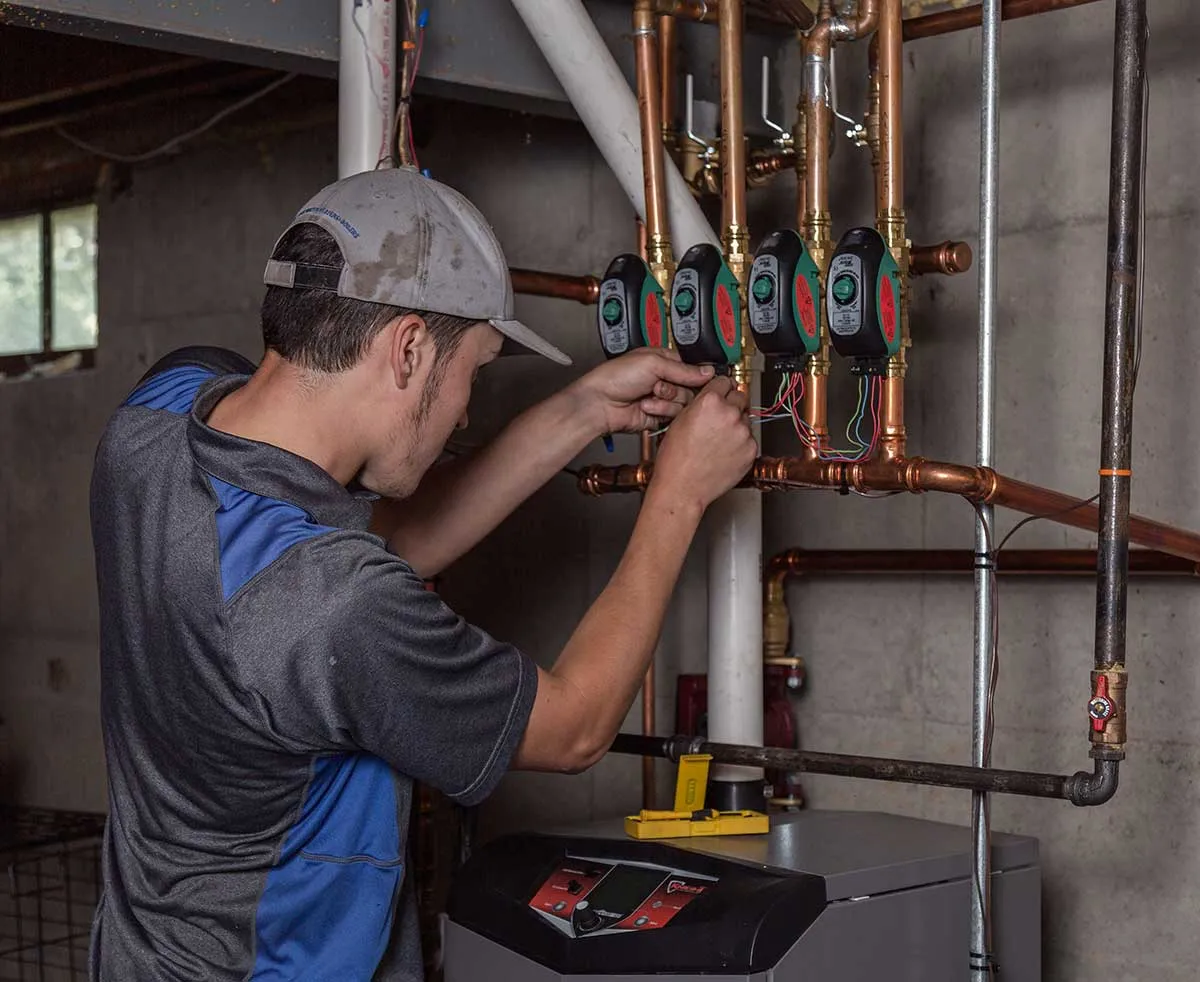
A boiler that whistles is usually telling you water is not flowing through it freely. Limescale or sludge in the heat exchanger is the most common cause, followed by low pressure, trapped air and a struggling pump.
Why Is My Boiler Whistling?
A boiler usually whistles because water is being squeezed through a narrowed passage inside it and is starting to boil in small pockets before it can move on. The narrowing is most often limescale or sludge in the heat exchanger, and the whistle is the same effect that makes a kettle sing as it comes to the boil.
That is why a whistle and a bang are close relatives. A whistle is the early, gentler version of the problem; when the steam pockets get bigger and collapse hard, you hear the knocking described in our guide to why a boiler makes a banging noise. A whistle is worth dealing with while it is still a whistle. For gurgling, humming and the other sounds a boiler makes, see our guide to what different boiler noises mean.
When Does the Whistling Happen?
The timing of the noise is the most useful clue you can give an engineer, so note it before you call. A whistle that starts a minute or two after the burner lights and gets louder as the radiators warm up points to the heat exchanger. A whistle only when you run a hot tap on a combi points to the hot water side of the boiler. A high-pitched whine that is there whenever the heating is on, hot or cold, points more towards the pump.
- Rises with temperature: scale or sludge restricting flow through the heat exchanger.
- Only on hot water (combi): scale on the domestic hot water side, common in hard water areas like most of London.
- Constant whine or hum: the circulating pump, or air trapped around it.
- Only on windy days, from outside: wind across the flue terminal, which is usually harmless but worth mentioning at the next visit.
Limescale and Sludge in the Heat Exchanger
Scale and sludge are behind most whistling boilers. London's water is hard, so every litre that passes through a combi's hot water side leaves a little mineral behind, and over years it narrows the waterways. On the heating side, the problem is usually black magnetite sludge from radiators corroding from the inside, which collects in the narrowest point of the system: the boiler.
Either way, less water moves through the heat exchanger while the burner puts in the same heat, so the metal runs hotter than it should and the water touching it flashes into tiny bubbles. Other signs that point the same way are radiators that are cold at the bottom, a boiler that cuts out on overheat, and a system that takes longer to warm up than it used to. If several of those sound familiar, our guide to signs your heating system has a sludge problem explains what a proper clean involves.
Low Pressure, Trapped Air and the Pump
If the heat exchanger is clean, the next suspects are anything that slows the water down. Low system pressure is the easiest one to check: most sealed systems should read roughly 1 to 1.5 bar when cold. Below that, water moves less freely and the boiler can whistle or gurgle before it eventually locks out.
Air in the system causes a similar noise, often with a gurgle mixed in, and is common after work on the radiators or pipework. A pump that is wearing out, set to the wrong speed or partly seized also reduces flow and can whine on its own. Checking the pump and its speed setting is a job for an engineer, since it sits inside or next to the boiler with mains power running to it.
Is a Whistling Boiler Dangerous?
A whistle on its own is not a sign of a gas leak, and the boiler has safety devices that shut it down if it overheats. It is still a fault, not a quirk. The boiler is working harder than it should, running hotter than it should, and the heat exchanger is under more thermal stress every time it fires. Left for months, that is how a cheap clean turns into an expensive part.
The picture changes if the whistle comes with anything else. A smell of gas, a hissing from the gas pipe or meter, a yellow or orange flame, soot around the case, or headaches and drowsiness in the house are not boiler noise problems. Turn the boiler off, open windows, leave the gas alone and call the National Gas Emergency Service on 0800 111 999.
What You Can Safely Check Yourself
A few checks take minutes and involve nothing inside the boiler casing. Look at the pressure gauge and, if it is below the normal range, top it up using the filling loop as your manual describes. Bleed any radiators that are cold at the top, then recheck the pressure, because bleeding lowers it. Note whether the noise follows the heating, the hot water or both, and whether the display shows a fault code.
Stop there. Do not remove the boiler casing, tap on pipes inside it or add chemicals through the boiler. The case on a modern boiler is part of its sealed combustion chamber, and any work behind it must by law be done by a Gas Safe registered engineer.
What an Engineer Will Do
An engineer will confirm the pressure, then compare the flow and return temperatures at the boiler. A large difference between the two, or a flow temperature climbing much faster than normal, confirms poor circulation. From there it is a matter of finding out why: checking the pump runs and is set correctly, looking at a radiator drain-off or filter for sludge, and on a combi checking the hot water heat exchanger (often a separate plate heat exchanger) for scale.
The fix follows the cause. Sludge usually means cleaning the system and fitting or emptying a magnetic filter. Scale on a combi's hot water side can mean descaling or replacing the plate heat exchanger. A tired pump is replaced. If the boiler is old and the main heat exchanger itself is badly scaled, it is fair to ask whether a repair is still worth it, and a good engineer will tell you honestly when it is not. If you want it diagnosed, our boiler repair service in London starts with finding the cause before quoting for any part.
Frequently asked questions
Why does my boiler whistle when the heating comes on?
Usually because water is not moving through the heat exchanger fast enough, so it starts to boil in small pockets as the burner heats it. Limescale, sludge, low pressure and a weak pump are the common causes. It tends to get louder as the system warms up.
Can a boiler whistle because of low pressure?
Yes. Low pressure slows the water down and can make the boiler whistle or gurgle before it locks out. Check the gauge, top up to the normal range if it is low, and if the pressure keeps falling, get the reason found rather than topping up repeatedly.
Will a power flush stop my boiler whistling?
Only if sludge is the cause. If the whistle comes from scale on a combi's hot water side, a worn pump or air in the system, a flush will not fix it. That is why the cause should be confirmed before any cleaning is booked.