Boiler Condensate Pipe Blocked but Not Frozen? Causes and What to Check
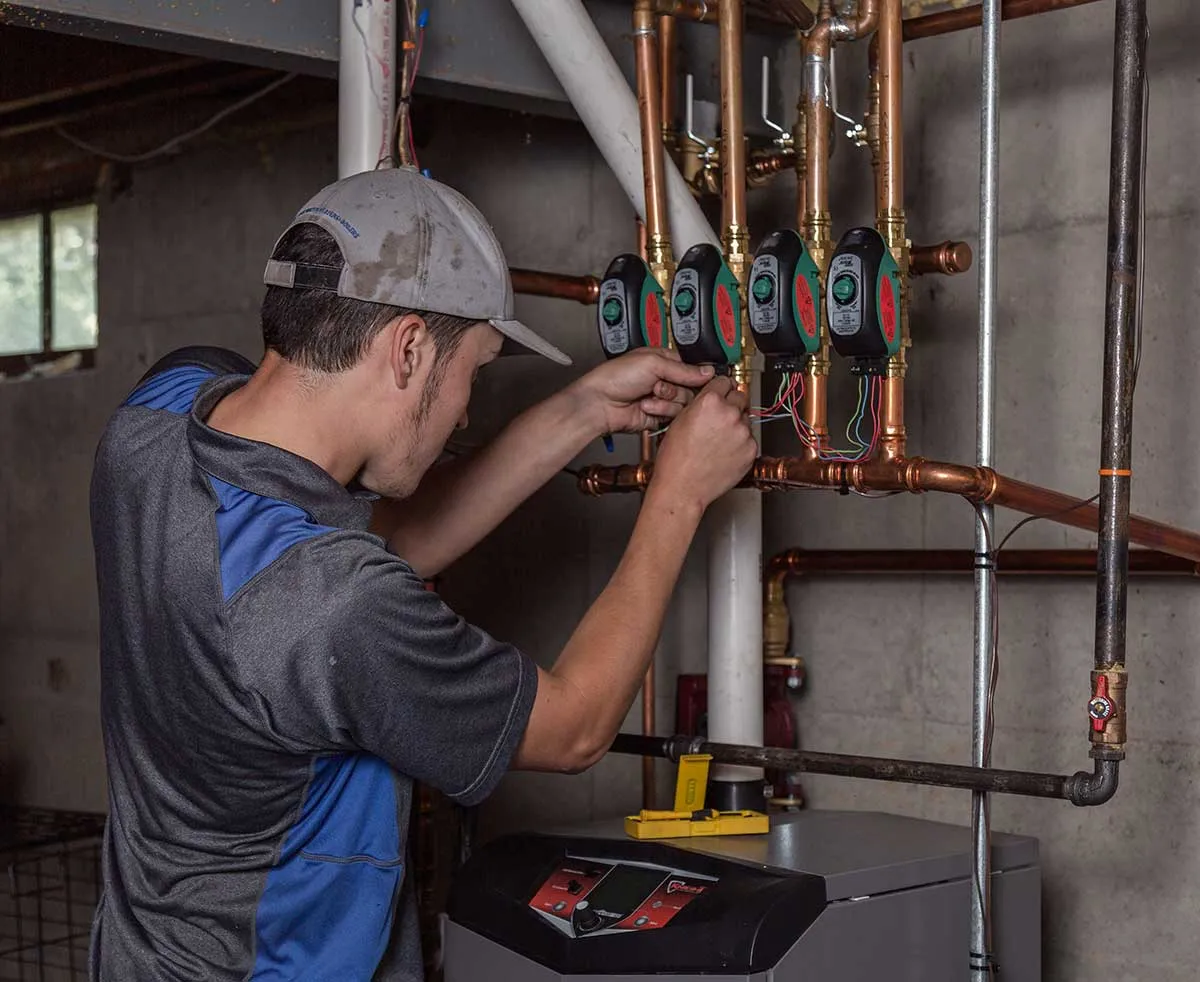
A condensate pipe can block in any weather, not just a freeze. Sludge in the trap, a pipe with too little fall, a blocked gully or a failed condensate pump are the usual causes. You can check the outside end; the trap inside the boiler is engineer work.
If your boiler keeps locking out and the condensate pipe is blocked but it is not frosty outside, the blockage is somewhere else in the run. The usual culprits are sludge in the condensate trap inside the boiler, a pipe that does not fall steeply enough and holds water, a blocked drain or sink waste at the far end, or a condensate pump that has stopped working. You can safely check the outside end and where it drains to. Anything inside the boiler casing is work for a Gas Safe registered engineer.
What Does a Blocked Condensate Pipe Do to a Boiler?
A blocked condensate pipe stops the boiler draining the acidic water it makes, so the water backs up inside and the boiler shuts itself down. It is a safety lockout, not a breakdown.
Every condensing boiler turns some of the water vapour in its flue gases back into liquid. That condensate collects in a trap, sometimes called a siphon, at the bottom of the boiler and runs away through a plastic pipe to a drain. When the heating is working hard the boiler can produce several litres a day. If the water cannot get out, it rises back towards the burner and the flue, and the boiler locks out before it can do any damage.
Few boilers show a plain "condensate blocked" message. More often you get an ignition or flame-failure code, because water backing up disturbs the flame. On some Worcester Bosch models it appears as the D5 condensate fault. Our list of ignition lockout codes by brand shows which codes can point back to the condensate.
How Do You Know the Condensate Pipe Is the Problem?
The giveaway is a gurgling boiler that fires, runs for a while and then locks out, often worse when the heating has been on for a long time. A reset buys you a few minutes, not a fix.
- Gurgling or bubbling from the boiler as it fires, the sound of water sitting in the trap.
- A lockout that returns after each reset, often after a similar amount of running time.
- No water coming out of the end of the pipe when the boiler has been running for a while, where you would normally see a drip or a trickle.
- Water where it should not be: dripping from the bottom of the boiler, or a sink that drains slowly or smells if the condensate pipe joins its waste.
- It happens in mild weather. If there is no frost, freezing is ruled out and something is physically in the way.
If it is below freezing and the outside section is iced up, that is a different job with a different fix. Our guide to what to do with a frozen condensate pipe covers it.
What Blocks a Condensate Pipe When It Is Not Frozen?
Most non-frozen blockages start inside the boiler, in the trap, or at the far end of the pipe where it drains. The pipe in between is usually only a problem if it was badly installed or has been disturbed.
- Sludge in the condensate trap. Fine sediment from the heat exchanger and flue settles in the trap over time and eventually chokes it. This is the most common cause on boilers that have gone a few years without a thorough service.
- Not enough fall. The pipe should fall steadily all the way from the boiler to the drain. Industry guidance calls for at least 2.5 degrees, roughly 45 mm for every metre of pipe. A run that sags, dips or goes uphill holds water and debris.
- A blocked outlet. The outside end often drops into a gully that fills with leaves, or into a soakaway that has silted up. If the condensate is piped into a kitchen sink or washing machine waste, a blockage in that waste backs straight up to the boiler.
- A failed condensate pump. Where there is no drain the pipe can fall to, as in many basement flats and some loft installs, a small pump lifts the water away. If the pump stops, or its float sticks, the water has nowhere to go.
- Damage or disturbance. Kitchen refits, new units and decorating can crush, kink or disconnect the pipe inside a cupboard or boxing.
What Can You Safely Check Yourself?
You can check everything you can see from the outside of the boiler: the end of the pipe, where it drains, the visible run and any condensate pump. Do not remove the boiler casing or try to take the trap apart.
- Find where the pipe ends. It is usually a white or grey plastic pipe leaving the wall near the boiler and running to a drain, or it joins the waste under a sink.
- Clear leaves and debris from around the open end and the gully it drains into. Make sure the end is not sitting under water.
- Look along any visible section for sags, dips, crushed or disconnected joints, especially inside kitchen cupboards.
- If it joins a sink waste, check the sink drains freely. A slow sink often means the shared waste is part blocked.
- If you have a condensate pump, check it has power and listen for it running when the boiler has been firing. Some have an alarm or a light when the reservoir is full.
- Reset the boiler once, following the manual, and see whether it runs normally.
Do not push wire, rods or anything else up the pipe towards the boiler. You can dislodge debris into the trap or split the pipe inside the wall, and then the problem is harder to find.
How Does an Engineer Fix a Blocked Condensate Pipe?
An engineer clears the trap, finds out why it blocked and puts that right, so the fault does not come straight back. Cleaning the trap alone treats the symptom.
On most boilers the trap sits inside or under the casing, so removing and cleaning it is done by a Gas Safe registered engineer. It is also checked as part of a proper service. They will then test the run: whether it falls correctly, whether the pipe size suits the length and route, and whether the outlet is sound. Typical fixes include re-running a section with proper fall and support, taking an external run inside where possible, replacing a failed condensate pump or clearing the gully or soakaway. Where the trap keeps filling with sediment, that points to dirt in the heating system itself, and the engineer should explain the options rather than just clean it again.
If the condensate route is clear and the boiler still locks out, the cause is something else, often an ignition fault. That needs diagnosing properly, which is what our boiler repair service in London starts with.
Is a Blocked Condensate Pipe Dangerous?
On its own, no. The lockout is the boiler protecting itself. The risk comes from forcing it to keep running or ignoring water leaking from the casing.
Condensate is mildly acidic, so water dripping out of the boiler should not be left to soak into floors or electrics. Turn the boiler off if it is leaking, and mop up with gloves on. Repeated resets fire the burner with water sitting where it should not, which strains parts that are expensive to replace. If you smell gas at any point, that is a separate emergency: turn the gas off at the meter, open windows, avoid electrical switches and call the National Gas Emergency Service on 0800 111 999.
Frequently asked questions
Can a condensate pipe block in summer?
Yes. Freezing is only one cause. Sludge in the trap, a pipe with too little fall, a blocked gully or sink waste, or a failed condensate pump can all block the pipe in any season. Summer blockages often show up when you run hot water for a long time, because that is when the boiler makes most condensate.
Can I clean the boiler condensate trap myself?
On most boilers the trap sits inside or under the casing, so it should be cleaned by a Gas Safe registered engineer. You can safely clear the outside end of the pipe and the drain it runs into, and check any condensate pump has power.
Why does my condensate pipe keep blocking after it has been cleared?
A pipe that blocks again usually has a cause that was not fixed: a run that sags or has too little fall, a pipe too small for a long outside route, a failing condensate pump, or a heating system shedding sediment into the trap. An engineer should find which one before clearing it again.