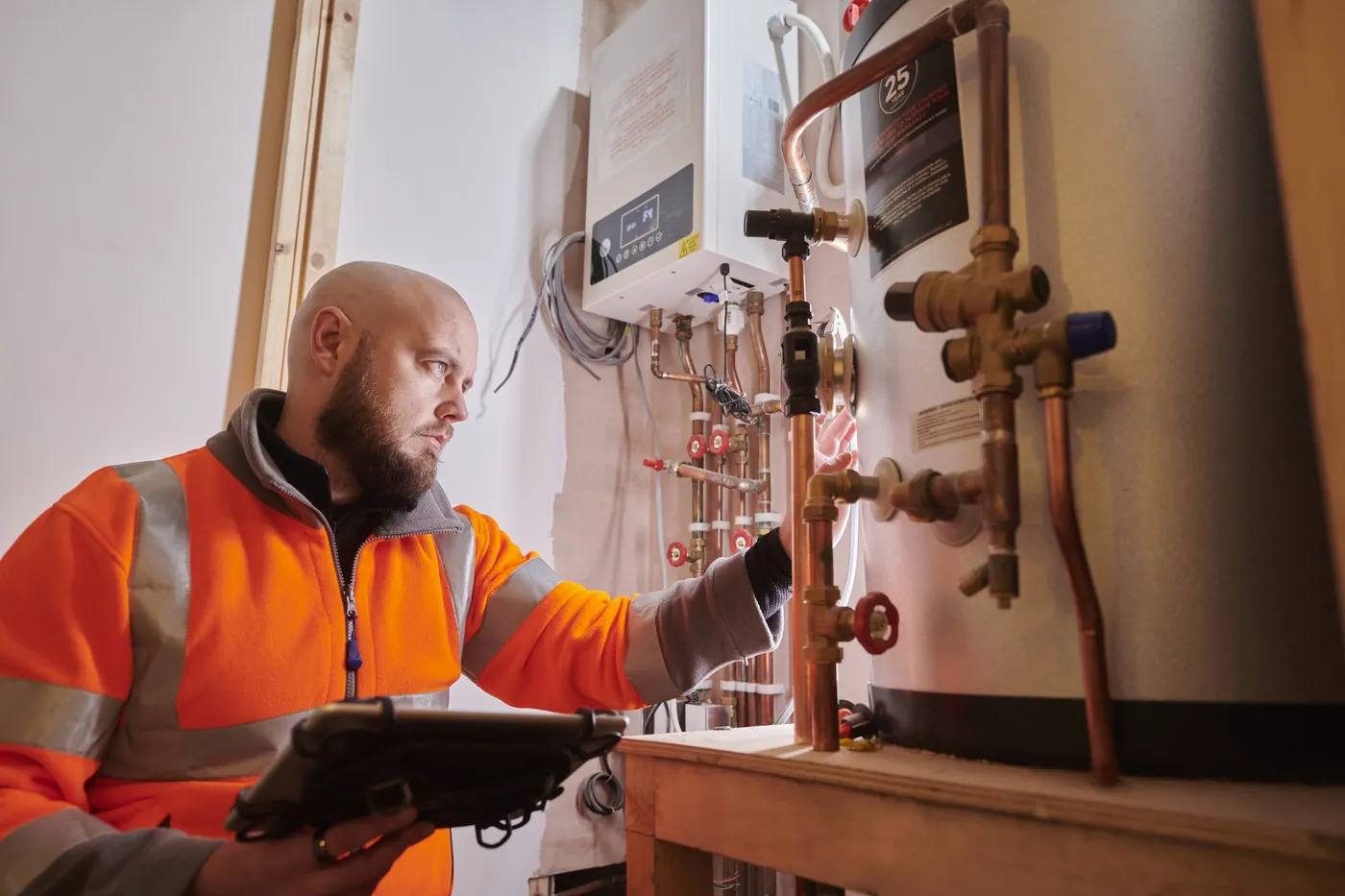
If your combi boiler's hot water runs cold then hot, common causes are limescale in the plate heat exchanger, a sticking diverter valve, or a faulty flow sensor. This is a fluctuation fault, different from a total loss of hot water.
The Problem: Intermittent Hot Water from Your Combi
When you turn on a hot tap, you expect a steady, reliable flow of hot water. If your combi boiler is delivering water that starts hot, turns lukewarm or cold for a period, and then becomes hot again—all during the same draw—you're experiencing a classic temperature fluctuation fault. This is distinct from a complete lack of hot water. The boiler is working, but something is preventing it from maintaining a consistent output temperature at the tap. Understanding the 'why' helps explain what an engineer will investigate.
How a Combi Boiler Makes Hot Water On-Demand
To diagnose the fault, it's useful to know the basic sequence. When you open a hot tap, a flow sensor in the boiler detects water movement. This signals the main burner to ignite and a diverter valve to switch, directing hot water from the heat exchanger to your taps instead of your radiators. A key component is the plate heat exchanger, where cold mains water flows in thin channels next to channels of hot water from the boiler's primary circuit. Heat is transferred quickly, providing instant hot water. Any disruption to this sensitive, fast-reacting system can cause the temperature to yo-yo.
Common Causes of Hot Water Fluctuations
An engineer will typically check these components in order of likelihood:
- Limescale or Debris in the Plate Heat Exchanger: This is the most frequent culprit, especially in hard water areas. Limescale builds up on the thin plates, insulating them and reducing heat transfer efficiency. Debris from the system can also partially block the narrow waterways. This causes the boiler to overheat the water in its primary circuit. A safety thermostat or the boiler's control system then cuts the burner to cool down, making your tap water run cold. Once it cools, the burner re-ignites, and the cycle repeats, causing the hot-cold-hot pattern.
- A Faulty or Sticking Diverter Valve: The diverter valve is a motorised valve that directs hot water either to the radiators or the plate heat exchanger for taps. If its mechanism is worn, its rubber seals are perished, or it has debris inside, it may not switch fully or may 'dither' between positions. This can cause hot water intended for your tap to be partially diverted back to the radiators, leading to a sudden drop in temperature at the tap.
- Inaccurate Flow Sensor or Thermistor: The boiler's logic depends on accurate readings. A faulty flow sensor might under-report how much water is moving, causing the boiler to fire at too low a rate. A faulty thermistor (temperature sensor) on the hot water outlet might send incorrect readings to the boiler's PCB, making it adjust the burner erratically. Both can lead to unstable water temperatures.
What a Heating Engineer Will Check
A Gas Safe registered engineer will diagnose the issue systematically. They will first check the boiler's fault code display for any stored error codes that point to specific components. They will then likely test the flow rate and temperature at the tap to confirm the fluctuation pattern. Internally, they may check the diverter valve's operation, test the resistance values of the flow sensor and thermistors, and inspect the plate heat exchanger for signs of blockage or scaling. In many cases, cleaning or replacing the plate heat exchanger or the diverter valve cartridge resolves the problem.
Why You Shouldn't Ignore This Fault
While you still get some hot water, this fault puts extra strain on your boiler. The constant overheating and safety cut-out cycles stress the heat exchanger and other components. A partially blocked heat exchanger also reduces efficiency, increasing your gas bills. Most importantly, if you ever smell gas or notice a yellow, lazy burner flame (viewable through the boiler's sight glass on some models), turn off the boiler, ventilate the area, and call the gas emergency line immediately. These are signs of a separate, urgent gas safety hazard that requires immediate attention from a Gas Safe engineer.
Frequently asked questions
Can I fix a fluctuating hot water problem myself?
For most homeowners, no. Diagnosing and repairing components like the plate heat exchanger or diverter valve requires specific tools, testing equipment, and Gas Safe registration for any work involving gas or combustion. Attempting to open the boiler casing yourself is dangerous and illegal for gas-related faults.
Is this the same problem as having no hot water at all?
No, they are different fault types. A total loss of hot water often points to a complete failure of a key component like the diverter valve motor, the flow sensor, or the ignition system. The hot-then-cold fluctuation is typically a performance or control issue within an otherwise operating system, often related to heat transfer or valve positioning.
Will a power flush fix my hot water running cold?
A power flush cleans the central heating system (radiators and pipework), not the domestic hot water circuit in a combi. If the fluctuation is caused by debris that has migrated into the plate heat exchanger, a flush might help, but often the exchanger itself needs to be chemically cleaned or replaced. Your engineer will advise based on their diagnosis.