No Power to Boiler? Why the Display Is Blank and What to Check
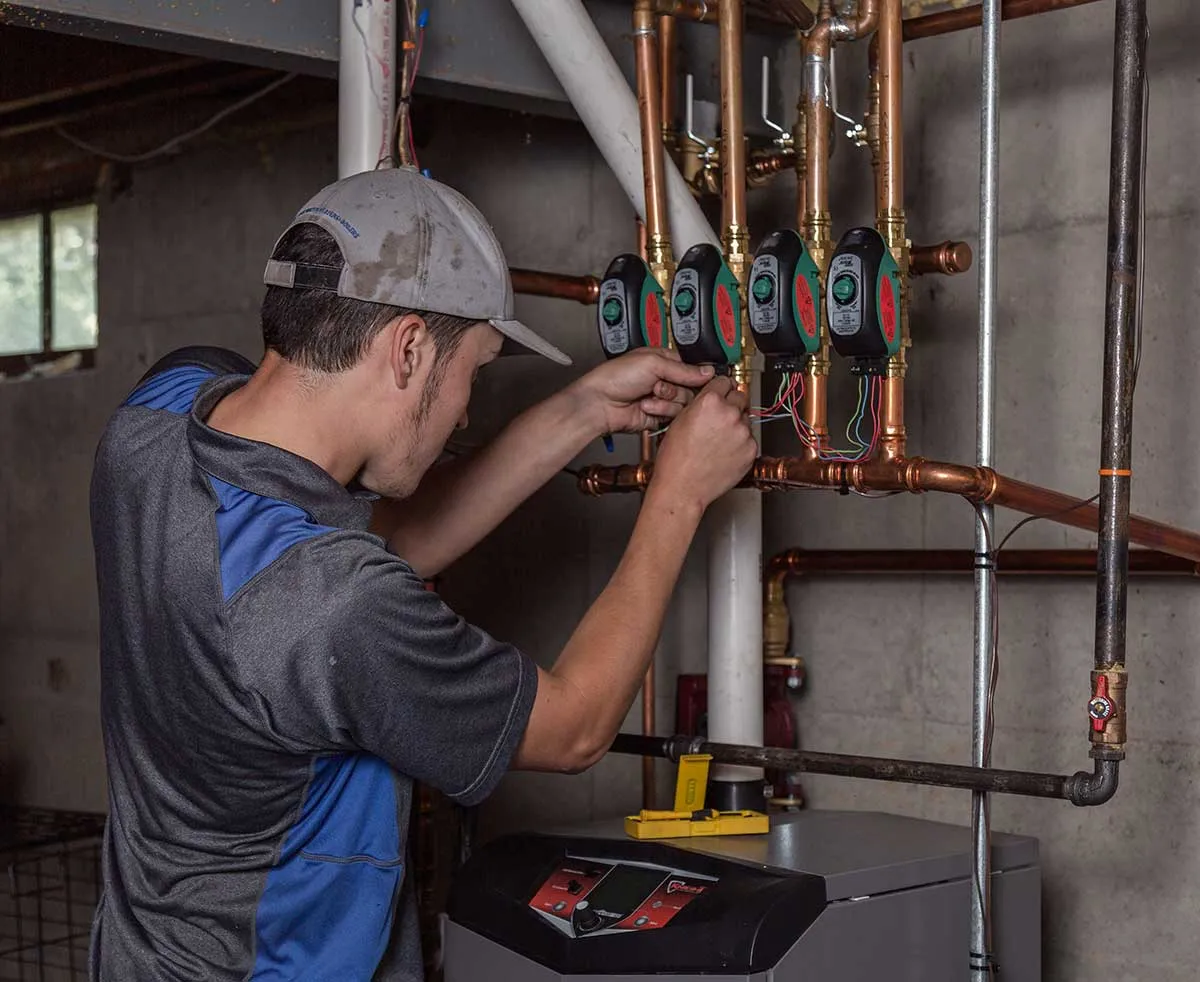
A boiler with no power and a blank display is most often an electrical supply problem outside the boiler: the switch, the fused spur, a tripped circuit or a power cut. If the supply is fine, the fault is inside, usually a blown internal fuse or the circuit board.
Why Does My Boiler Have No Power?
Most of the time the boiler has lost its electrical supply rather than failed itself: the switch next to it is off, the fuse in that switch has blown, or a circuit in your consumer unit has tripped. If the supply is fine and the display is still blank, the fault is inside the boiler, usually a blown internal fuse, a failed power supply on the circuit board, or a loose connection.
A gas boiler needs electricity for everything: the display, the fan, the pump, the ignition and the controls. With no power it does nothing at all, which is different from a boiler that has power but has locked out with a fault code.
First: Is It Really No Power?
Check that the boiler is actually off before assuming a fault. Some models dim or switch off their screen after a while with no demand, and pressing any button or turning a control knob wakes them up. A boiler with a lit display but no heating is a different problem, and our no heating or hot water checklist is the better place to start.
Signs that it genuinely has no power:
- No lights, no display and no response to any button.
- No sound of the pump or fan when you ask for heat or run a hot tap.
- A wireless thermostat that shows it has lost connection, because its receiver is often powered from the boiler.
Electrical Checks You Can Safely Make
These checks are all outside the boiler casing and are the ones an engineer will ask about on the phone. Work through them in order.
- The rest of the house. Are lights and sockets working? A local power cut or an empty prepayment electricity meter takes the boiler with it.
- The boiler switch. Most boilers are fed from a fused spur, a switch plate on the wall near the boiler or in the airing cupboard, often with a small red light. Make sure it is on. It is easy to knock off when a cupboard is being used for storage.
- The consumer unit. Look for a tripped breaker or RCD in your fuse box. If one has tripped, reset it once.
- If it trips again, stop. A breaker that trips again straight away means a fault on that circuit, possibly in the boiler. Leave it off and call an engineer or electrician.
- The fuse in the spur. The fused spur holds a small cartridge fuse, typically 3 amps for a boiler. A blown fuse means something drew too much current, so it has failed for a reason. If a new fuse blows again, do not keep replacing it.
- The boiler's own on/off switch or mode knob. Some boilers have a power button on the front panel or a knob with an off position.
Do not open the boiler casing to look at fuses or wiring inside. Behind the cover are mains voltage and the gas components, and any work there must be done by a Gas Safe registered engineer.
Water, Leaks and a Tripped Circuit
If the power went off at the same time as water appeared under or around the boiler, treat them as the same problem. Water reaching the electrics is a common reason for a boiler circuit to trip, and resetting it while the leak continues is unsafe.
Leave the circuit off, turn off the boiler's switch at the spur, put a container under the drip and, if you know where it is, close the cold water feed to the boiler. Our guide to what to do when a boiler is leaking water covers the next steps.
If the Supply Is Fine: Faults Inside the Boiler
When the spur is on, the fuse is good and the circuit has not tripped, but the boiler is still dead, the fault is internal. The usual causes are:
- A blown fuse on the circuit board. Boards carry their own fuses, which blow to protect the board when a pump, fan or other part shorts out. Replacing the fuse without finding the faulty part usually means it blows again.
- A failed circuit board. Power surges, age and water damage can all kill the board's power supply. Our article on boiler PCB faults explains how engineers confirm a board has failed.
- A loose or burnt connection at the terminal block where the mains supply enters the boiler.
- A failed display or control panel, where the boiler may still be receiving power but cannot show it.
If the boiler does come back after a power cut but shows a supply-related code, that points at the incoming electricity rather than the boiler. On Baxi boilers, for example, E97 relates to the mains supply being outside the range the boiler expects.
What Happens When an Engineer Visits
An engineer confirms mains voltage is reaching the boiler, then works inwards: the terminal block, the board's fuses, the board's output, and each component the board powers. A blown board fuse is treated as a symptom, so they test the pump, fan and other parts for a short before fitting a new one.
The repair is often small, such as a fuse plus the part that blew it, or a connection remade. A failed circuit board is a bigger part but still a repair on most boilers, and it is usually only on an old boiler with other problems that replacement becomes the better answer.
Frequently asked questions
Why is my boiler display blank?
Usually because the boiler has lost power: the switch or fused spur is off, the fuse in it has blown, a breaker has tripped or there is a power cut. Some boilers also switch the screen off when idle, so press a button first. If the supply is fine and it is still blank, the fault is inside the boiler.
Can a power cut damage a boiler?
Usually not. Most boilers restart on their own when power returns, though some need a reset and the clock or programmer may need setting again. A surge when power returns can occasionally damage the circuit board, so if the boiler stays dead or shows a fault afterwards, have it checked.
What fuse does a boiler use?
Most domestic gas boilers are fed from a fused spur fitted with a 3 amp fuse, but check your boiler's installation manual. If the fuse has blown, something caused it. If a replacement blows again, leave it and get an engineer to find the fault rather than fitting a larger fuse.