Boiler Fan Fault: Symptoms, Causes and What to Do
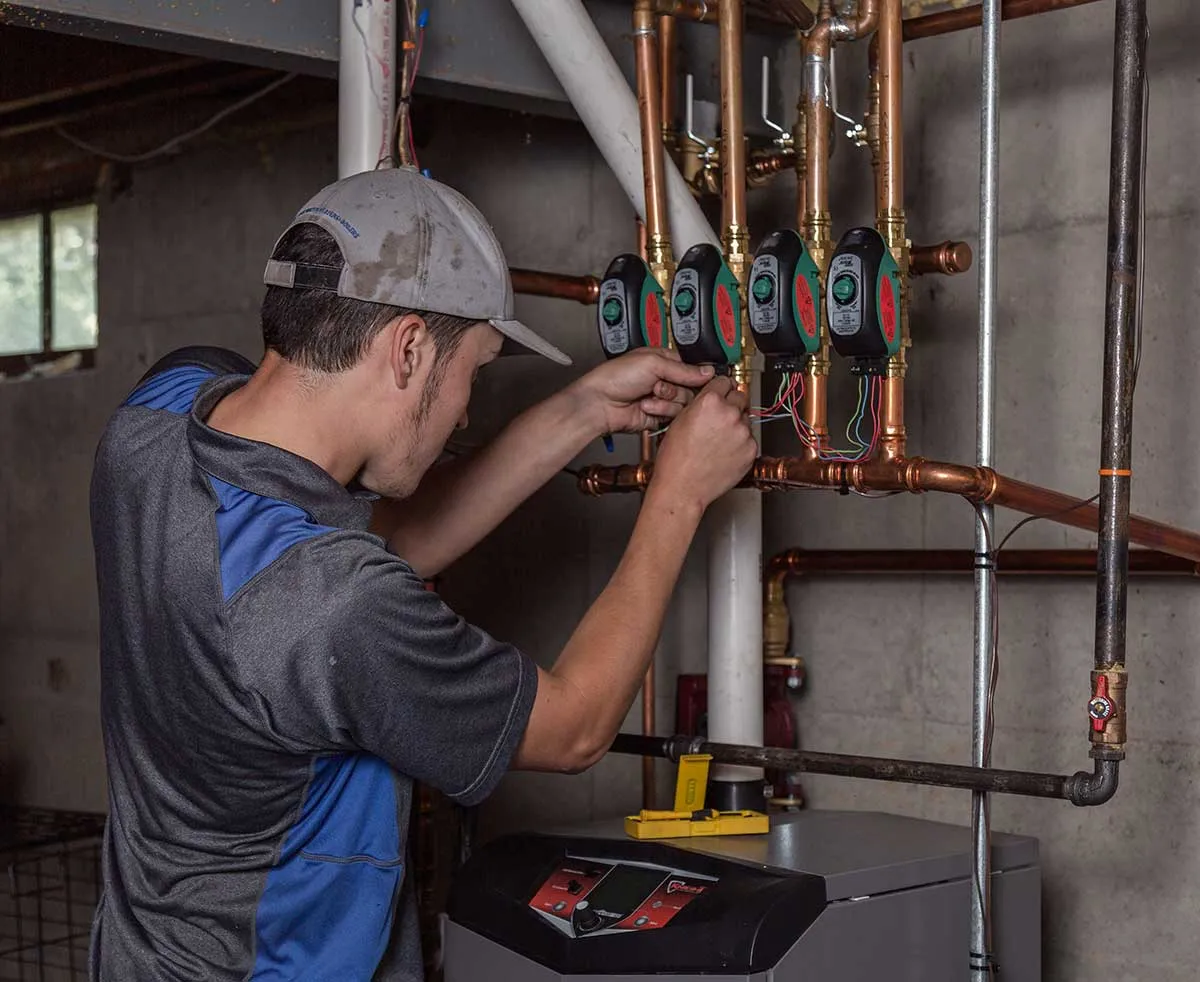
A boiler fan fault usually shows up as a boiler that tries to start and then locks out, often with a fan-specific code and sometimes a whirring or grinding noise. The fan itself, its wiring, the circuit board or a blocked flue can all cause it.
What Is a Boiler Fan Fault?
A boiler fan fault means the boiler cannot confirm its fan is running at the right speed, so it refuses to light. The fan is a safety-critical part: without it, the boiler cannot draw in air or push its exhaust gases safely out of the flue, so any doubt about it stops the boiler before ignition.
Every modern condensing boiler has one. When there is a call for heat, the fan starts first and clears the combustion chamber. The circuit board then checks the fan speed, or on some older boilers an air pressure switch, and only opens the gas valve once it is happy. If that check fails, you get a lockout rather than heat.
Common Symptoms of a Failing Boiler Fan
The clearest sign is a boiler that makes a start-up noise and then locks out without ever lighting. Other symptoms include:
- A fan fault code. On Worcester Bosch boilers this is typically C6, a fan fault; on Vaillant boilers F32, a fan speed fault; on Ideal boilers F3. Your manual lists the equivalent for other brands.
- New noises from the boiler at start-up: a rising whine, rattling, grinding or a loud hum. Fan bearings wear out gradually, so the noise often comes weeks before the fault code.
- The fan runs but nothing lights. You hear it spin up, then it stops and the boiler locks out.
- Intermittent heating. The boiler works some days and not others, or works once it has been reset, which is typical of a fan that is slowing down or a loose connection.
- Silence. Some fans stop completely, so there is no start-up noise at all before the lockout.
What Causes a Boiler Fan Fault?
The fan motor wearing out is the most common cause, but it is not the only one, and a good diagnosis rules out the others before a new fan is fitted.
- Worn bearings or motor. Fans run every time the boiler fires. After years of that, the bearings wear, the fan slows and the board rejects it.
- Dirt or debris. Dust, lint and occasionally insects or nesting material can foul the fan or the air intake.
- Wiring and connectors. A loose plug, a corroded terminal or a damaged speed-sensing lead gives the same code as a failed fan.
- The circuit board. The board powers and reads the fan. If its fan circuit fails, the fan may be perfectly healthy.
- A blocked flue or condensate pipe. If exhaust gas cannot get out, the fan works against back pressure, cannot reach its target speed and the boiler reports a fan fault. A frozen condensate pipe in winter can cause this.
- A faulty air pressure switch on older boilers that use one, or the small tubes connected to it splitting or blocking.
Timing is a useful clue. A fan code that appears suddenly on a cold, windy or frosty morning points towards the flue or condensate side. A fan code that follows weeks of a growing whine or rattle points towards the fan itself. A code that comes and goes with no noise at all often turns out to be a connection or the board. Tell the engineer which pattern you have seen, because it narrows the search.
Can I Fix a Boiler Fan Myself?
No. The fan sits inside the sealed combustion chamber, and removing or refitting it disturbs the seals that keep exhaust gases away from your home. That work must by law be done by a Gas Safe registered engineer, and the flue gases have to be tested afterwards.
What you can safely do takes a few minutes and involves nothing inside the casing:
- Write down the exact fault code and whether you heard the fan before the lockout.
- Check outside that the flue terminal is not blocked by leaves, a nest, a bin bag or a new fence panel.
- In freezing weather, check whether the plastic condensate pipe outside is frozen, as that can cause fan and ignition lockouts.
- Reset the boiler once. If it locks out again with the same code, leave it off.
If you smell fumes, see soot or staining around the boiler or flue, or anyone feels unwell with headaches or drowsiness, turn the boiler off, open windows and call the National Gas Emergency Service on 0800 111 999. A fan that is not clearing exhaust gases properly is one reason carbon monoxide alarms matter.
How an Engineer Diagnoses It
An engineer checks the flue and condensate route first, because a blockage there is quicker and cheaper to fix than a fan. Then they check whether the fan receives power from the board, whether it spins freely, and whether the speed signal reaches the board. On boilers with an air pressure switch, they test the switch and its tubes.
That order matters. A fan replaced without checking the wiring or the board can bring the same code back the next day. If the board's fan circuit is the fault, our article on why boiler circuit boards fail explains what that repair involves.
Repair or Replace the Boiler?
A failed fan is usually a straightforward repair. Fans are a standard replaceable part, and on most mainstream boilers they are widely available, so a fan fault on its own is rarely a reason to replace the boiler.
It becomes a harder question on an old boiler that has also needed other major parts recently, or where the fan is no longer made. In that case an honest engineer will set out both options rather than fit a part to a boiler that is near the end of its life. If you want it looked at, our boiler repair service in London starts with the diagnosis before any part is quoted.
Frequently asked questions
How do I know if my boiler fan is broken?
The usual signs are a boiler that tries to start and then locks out, a fan fault code such as C6 on Worcester Bosch or F32 on Vaillant, and new whining, grinding or rattling noises at start-up. A blocked flue, wiring or the circuit board can give the same symptoms, so it needs an engineer to confirm.
Can a boiler work without the fan?
No. The fan clears the combustion chamber and pushes exhaust gases out through the flue. If the boiler cannot confirm the fan is running at the right speed, it will not open the gas valve, so a failed fan means no heating and no hot water until it is repaired.
Is a noisy boiler fan dangerous?
A noisy fan is a warning that its bearings are wearing, not an immediate danger, because the boiler will lock out if the fan slows too much. Get it checked before it fails completely. If you smell fumes or see soot around the boiler, turn it off and call 0800 111 999.