Boiler Broken? What to Do First, and Who to Call
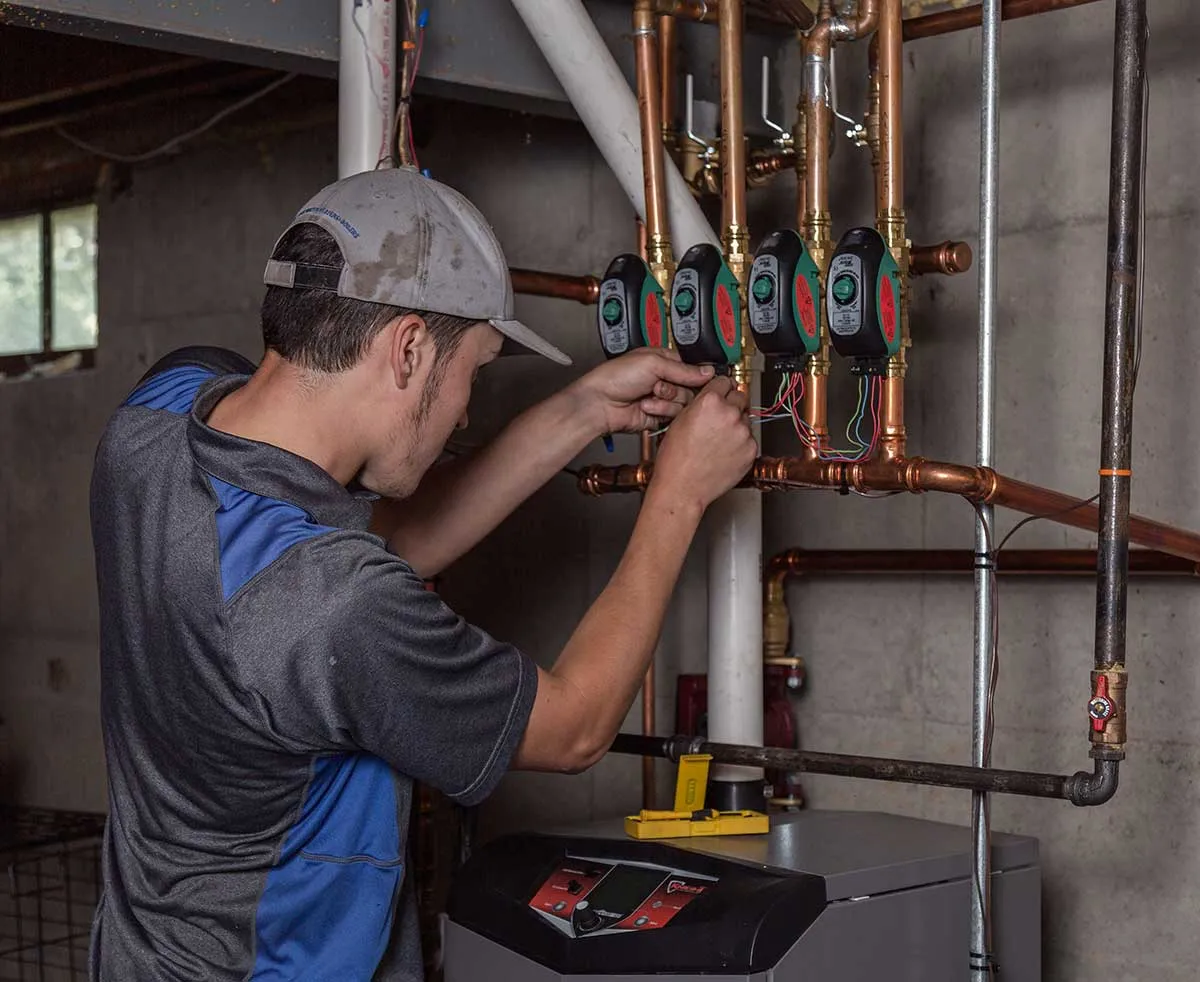
If your boiler is broken, check it is safe, write down what it is doing, and find out whether boiler cover, a manufacturer warranty or your landlord should arrange the repair before you call anyone. Then keep the house warm and the pipes safe while you wait.
If your boiler is broken, do three things in this order: make sure it is safe, note exactly what it is doing, then work out who should be paying for the repair before you ring anyone. That last step matters more than most people expect. Boiler cover, a manufacturer warranty and a landlord each change who you should call first, and calling the wrong person can leave you with a bill you did not need to pay.
First, Check It Is Safe
A broken boiler is usually an inconvenience, not a danger. The exceptions are a smell of gas, signs of carbon monoxide, or visible scorching, soot or an unusual flame at the boiler. If any of those apply, stop using it straight away.
- Smell of gas: turn the gas off at the meter if you can reach it safely, do not use electrical switches, open windows, and call the National Gas Emergency Service on 0800 111 999. Our guide on what to do if you smell gas near your boiler covers this in full.
- Headaches, dizziness or nausea that ease when you leave the house can point to carbon monoxide. Get everyone into fresh air, switch the boiler off and get medical advice.
- Water pouring from the boiler: turn the boiler off at the electrical spur, close the mains stopcock if the leak is heavy, and keep water away from the boiler's electrics.
If none of these apply, the boiler has simply stopped working. That is urgent if it is cold or someone vulnerable lives with you, but it is not a safety emergency, and you have time to go about the repair properly.
Write Down What the Boiler Is Doing
Before you call anyone, spend two minutes recording the symptoms. An engineer who knows the fault in advance is far more likely to arrive with the right part, and that is often the difference between one visit and two.
- The make and model, from the front panel or the label under the casing.
- Any fault code or flashing light on the display, written down exactly.
- Whether you have lost heating, hot water, or both.
- The pressure gauge reading.
- What the boiler does when it tries to start: nothing at all, a click and then nothing, or it lights and cuts out.
- Anything that changed just before: a cold snap, a power cut or a recent repair.
Rule Out the Simple Causes
A handful of boilers that look broken are actually waiting on something outside the boiler. These checks are safe for anyone and involve no gas work:
- The display is lit and the fused spur next to the boiler is on.
- Other gas appliances work, and a prepayment meter has credit.
- The pressure gauge reads roughly 1 to 1.5 bar when the system is cold.
- The timer, programmer or thermostat is actually calling for heat, and any batteries are fresh.
- In freezing weather, the plastic condensate pipe outside is not frozen.
We explain each of these in more depth in our article on what it means when the heating and hot water stop together. If one of them was the cause and the boiler restarts normally, you may not need anyone. Press reset once at most. A boiler that locks out again straight away is telling you the fault is still there. Do not take the casing off or try to repair anything inside it: in the UK, work on a gas appliance must be carried out by a Gas Safe registered engineer.
Work Out Who Should Pay Before You Call
This is the step people skip, and it is where money gets wasted. Check each of these before you book anyone:
- Boiler cover or home emergency insurance. If you have a policy, call the provider first. Most policies only pay for engineers they send, and many will not refund a bill from an engineer you booked yourself. Check the terms for exclusions such as sludge damage or a missed annual service.
- Manufacturer warranty. A boiler fitted in the last few years may still be under the manufacturer's warranty. Warranty repairs are normally arranged through the manufacturer, and an independent engineer working on the boiler during that period can complicate a claim. Check the paperwork or the manufacturer's website before booking anyone else.
- Renting. If you are a tenant, report the breakdown to your landlord or letting agent in writing straight away. Keeping the heating and hot water working is the landlord's responsibility, so the repair should be arranged through them rather than paid for by you.
- Leasehold flats and communal systems. If your heating comes from a shared plant room, the managing agent or building management deals with it, not a boiler engineer inside your flat.
If none of these apply, you are free to book any Gas Safe registered engineer.
Keep Warm and Protect the House While You Wait
A part on order can leave you without gas heating for a few days, so a little preparation helps.
- Hot water: if you have a hot water cylinder, it may have an electric immersion heater. Switching it on gives you hot water with the boiler off. Combi boilers have no cylinder, so this option does not exist.
- Heat: portable electric heaters are fine for a few days. Plug them straight into a wall socket rather than an extension lead, keep them clear of curtains and bedding, and never leave one running unattended overnight.
- Never use a gas cooker or oven to heat a room. It is not designed for it and can produce carbon monoxide in a closed space.
- Pipes: in a freeze, pipes in lofts, garages and outside walls can burst with no heating running. Keep the house above freezing, leave the loft hatch open for a little warmth, and know where your stopcock is.
What Happens When the Engineer Arrives
A good engineer confirms the symptoms, checks the gas supply and pressures, and reads the boiler's fault history before replacing anything. That diagnosis is what you are paying for. Guessing at parts is how people end up with two or three new components and the same fault. Ask what they found, which part failed and why, and whether anything else in the system caused it. Sludge, a failed expansion vessel or a leak somewhere else will often break the replacement part too.
Our boiler repair service works this way across London. When you get in touch, give us the notes you wrote down earlier and we can usually tell whether we are looking at an ignition fault, a pressure problem or a failed component before we arrive.
Repair It or Replace It?
Most broken boilers are worth repairing. A failed fan, pump, diverter valve, sensor or ignition electrode is a routine repair even on an older boiler. Replacement starts to make more sense when the heat exchanger has failed, when parts for your model are no longer made, when the same boiler keeps breaking down every winter, or when a single repair costs a large share of what a new boiler would. An honest engineer will tell you which side of that line you are on, and will say so if a repair is the wrong answer. Our guide on whether an old boiler is worth repairing covers that decision in more detail.
Frequently asked questions
What should I do first if my boiler breaks down?
Check it is safe first. If you smell gas, turn the gas off at the meter and call 0800 111 999. If there are no safety signs, note the fault code and pressure reading, try a few simple checks such as power, gas supply and the condensate pipe, then find out whether boiler cover, a warranty or a landlord should be arranging the repair before you book an engineer.
Is a broken boiler an emergency?
It is a safety emergency only if there is a smell of gas, signs of carbon monoxide, or scorching or an unusual flame at the boiler. A boiler that has simply stopped working is urgent, especially in cold weather or with vulnerable people at home, but it is not dangerous in itself.
Can I fix a broken boiler myself?
You can check the power, the gas supply, the pressure gauge, the controls and a frozen condensate pipe, and you can top up the pressure through the filling loop. Anything inside the boiler casing is gas work, which by law must be done by a Gas Safe registered engineer.